
Learn to Read → Read to Learn.
Foundation stage focusing on basic literacy, numeracy, and discovery of the natural world through the five senses.
Curriculum
In-house and curated resources for each curriculum level

High School Curriculum
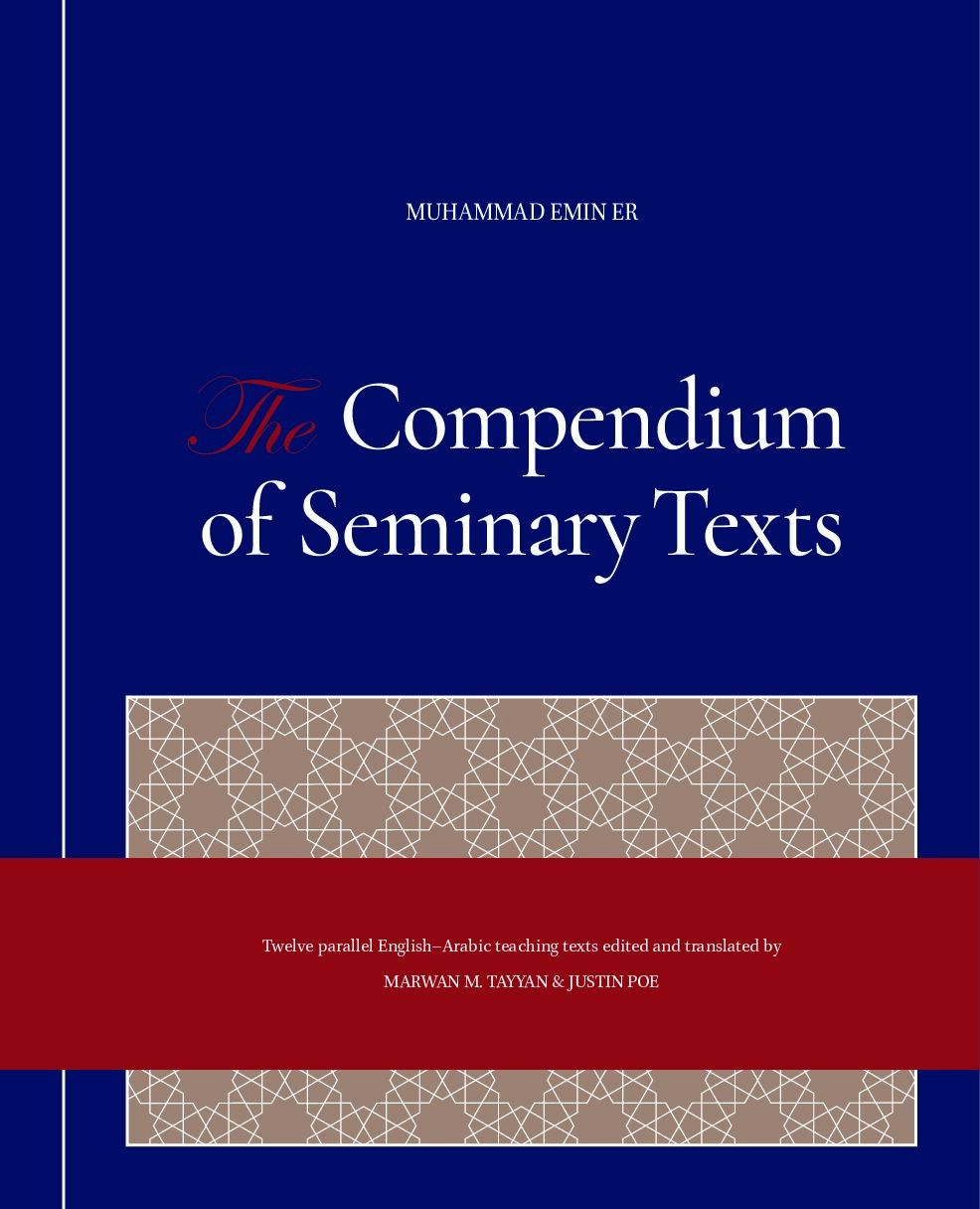
Seminary Texts
Read to Learn → Learn to Think.
Development of logical reasoning and critical thinking skills within an Islamic framework.
Learn to Think → Think to Critique.
The Verification and Renewal High School Curriculum (VRC) presents a suggested curricular map and core reading list for Islamic high schools, Muslim co-op and home-school programs, and after-school supplemental learning. The curriculum places a balanced emphasis on both the tools of reasoning (e.g., logic and mathematics) and the tools of discovery (e.g., natural sciences) and expression (e.g., grammar, rhetoric, art) through a holistic and integrated framework.
Language Arts
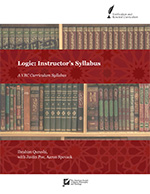
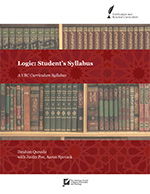
Logical Reasoning
Natural Sciences/Technology
Sacred Texts/Human Contexts
Personal Development/Wellness
Electives
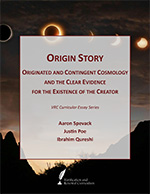
Critique to Verify and Renew.
Deep specialization in Islamic sciences with contemporary applications, focusing on scholarly literacy in the curriculum of the traditional seminary.
Full List of Syllabi and Open Source Textbooks.
The Verification and Renewal High School Curriculum (VRC) presents a suggested curricular map and core reading list for Islamic high schools, Muslim co-op and home-school programs, and after-school supplemental learning. The curriculum places a balanced emphasis on both the tools of reasoning (e.g., logic and mathematics) and the tools of discovery (e.g., natural sciences) and expression (e.g., grammar, rhetoric, art) through a holistic and integrated framework.
Curricular Essays
Discuss critical subjects in Islamic philosophy and theology.
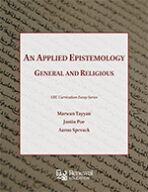
An Applied Epistemology, General and Religious
Authors: Marwan Tayyan, Justin Poe, and Aaron Spevack
Topics:
– Reality and sophistry
– Knowledge
– The epistemology of assent
– Reasoning and critical thinking
– Method and application
An Epistemology Overview of Textual Sources
Authors: Justin Poe, Marwan Tayyan, and Aaron Spevack
Topics:
– Types of Reported Knowledge
– How do we know what they mean?
– Definitive and Probable Revelatory Texts
– Authority to Interpret and Implement and Sources
– Conclusion
High-Voltage Epistemology: Understanding Islamic Theories of Knowledge via Epistemic ‘Signal Flow’
Authors: Aaron Spevack, Marwan Tayyan, and Justin Poe
Topics:
– Key Concepts
– Signification
– Transmission
– Reasons for Unwarranted Willful Response
– Conclusion
Signs On The Horizon: Ayatology, Semiotics, And The Qur’anic Science Of Signs
Authors: Aaron Spevack, Justin Poe, and Ibrahim Qureshi
Topics:
-The Problem
-The Solution: Ayatology Inside and Outside the Laboratory
-Ayatology: The Science of Signs
-Why Study Ayatology?
-The Theory of Signification: the Sign, the Signified, and Kinds of Signification
-Significations in the Sciences
-What Happens When Different Sciences Have the Same Object of Investigation? Same Subject Matter, Differing Vantage Points
-Ayatology in the Lab: Its Rules, Aims, and Limits
Principles Of Certainty
Authors: Safaruk Zaman Chowdhury, Ibrahim Qureshi, Justin Poe, and Aaron Spevack
Topics:
-The Importance of Core First Principles
-The Core Principles
-Applications
-God’s Existence
-Miracles
-Truth and Scepticism
When the Ordinary Turns Extraordinary: Occasionalism and The Nature Of Scientific Inquiry
Authors: Ibrahim Qureshi, Aaron Spevack, and Justin Poe
Topics:
-The Kinds of Observations
-Explaining Correlations
-Correlations as Psychological Associations
-What, then, is a Cause?
-The Cause of Causes
-Inferring Causes in Science
-Seeing with the Eye of Tawḥīd
-Grasping with the Hand of Wisdom
-Religion or Science?
-Men of a Thousand Eyes
-From Observations to Paradigms
-The Metaphysical Backdrop to Physics
-The Spiritual Effects in Scripture
-Healing
-Protection
-Relief
-Strength
Proofs of Prophethood
Authors: Justin Poe, Aaron Spevack, Ibrahim Qureshi
Topics:
-The Proof of Prophethood
-What is a Miracle (Muʿjiza)?
-What Makes the Quran a Miracle?
-The Quran’s Rhetorical Force
-Knowledge of the Unseen
-Quranic Preservation
-Our Knowledge of the Event
-Mass-Transmission of the Event
-Companions Who Narrated
-Chains from the Companions
-Three Objections and Their Responses
-The Messenger’s Love for His Umma
-The Messenger’s Generosity
-The Messenger’s Bravery and Courage
-The Messenger’s Wisdom and Fairness
-The Final Messenger